In short
- Landlocked kingdom of about 17,360 km² between South Africa and Mozambique; population roughly 1.2 million.
- Two capitals: Mbabane (administrative) and Lobamba (royal and legislative). Official languages siSwati and English.
- Known as Swaziland until April 2018. Ruled by King Mswati III and the Queen Mother.
- Landscapes from 1,862 m peaks to lowveld bush at about 21 m; four regions: Hhohho, Manzini, Lubombo, Shiselweni.
Eswatini in brief
Figures from the CIA World Factbook and Britannica; population estimates vary by source and year.
- Official name
- Kingdom of Eswatini (Umbuso weSwatini); formerly Swaziland
- Area
- ≈ 17,360 km²
- Population
- ≈ 1.2 million
- Capitals
- Mbabane (administrative), Lobamba (royal/legislative)
- Languages
- siSwati, English
- Currency
- Lilangeni (SZL), at par with the South African rand
- Highest point
- Emlembe, ≈ 1,862 m
- Lowest point
- Great Usutu River, ≈ 21 m
- Regions
- Hhohho, Manzini, Lubombo, Shiselweni
- Time
- UTC+2 (SAST), no daylight saving
The land
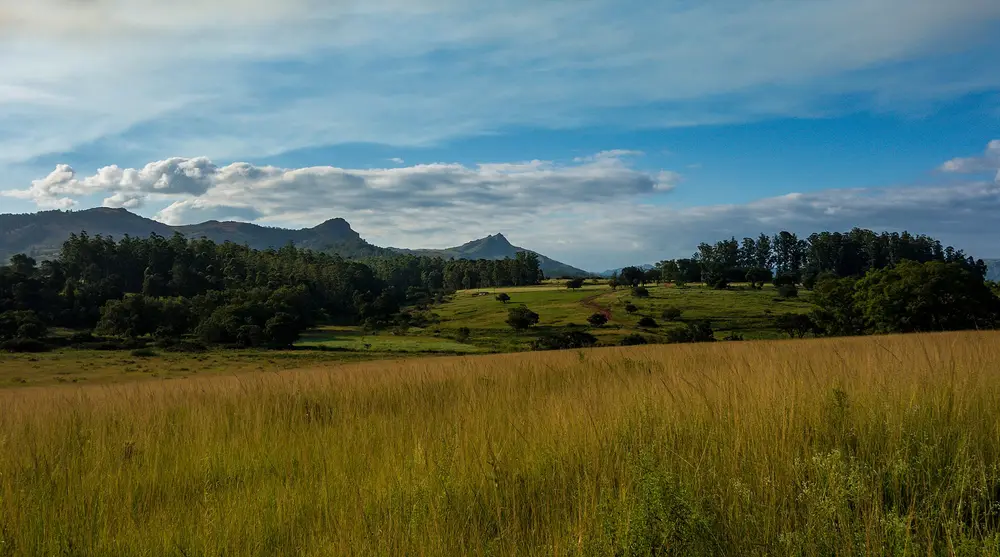
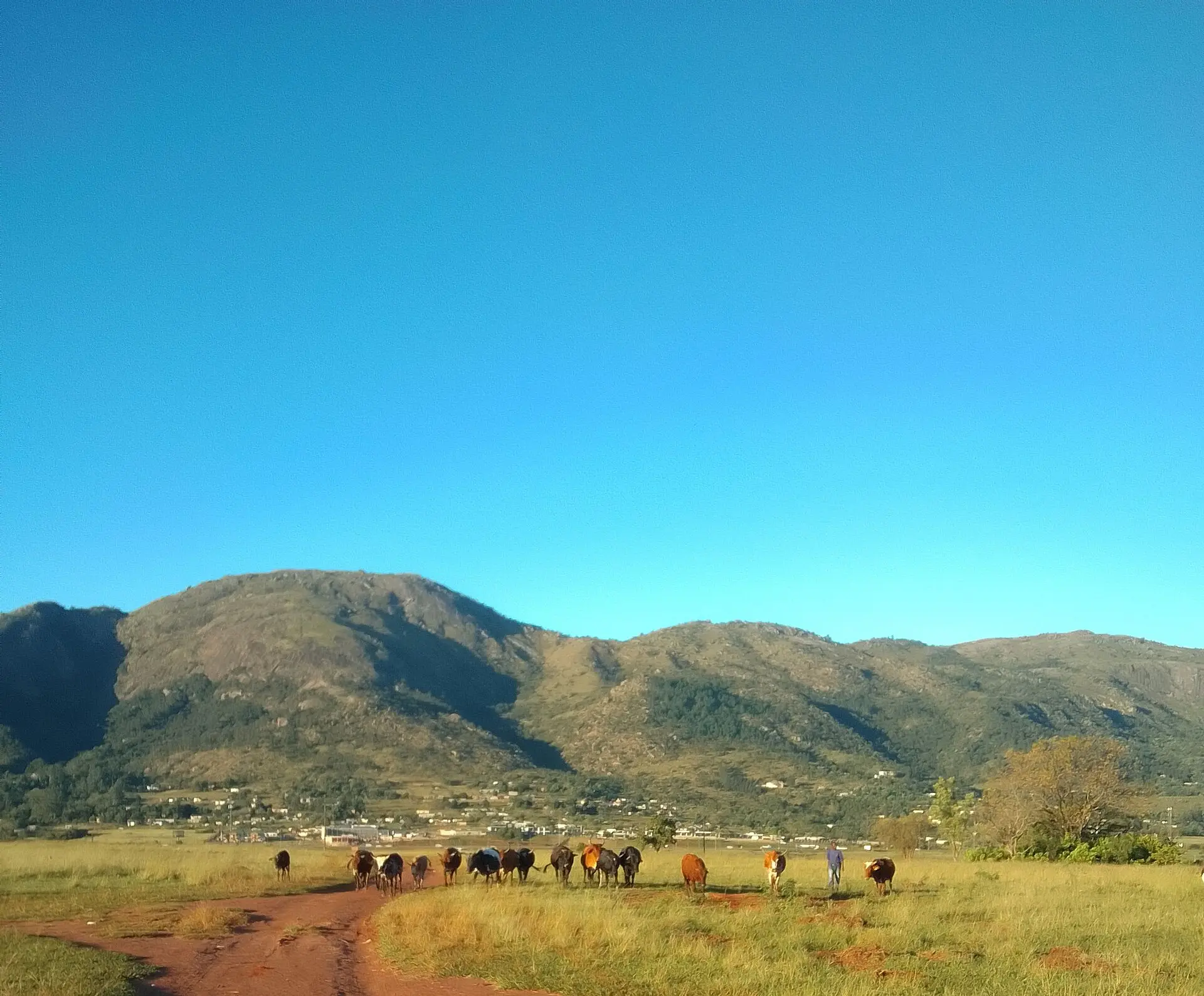
Few countries pack so much variety into so little space. From the highveld in the west — grassland, forest plantations and granite domes reaching 1,862 m at Emlembe on the South African border — the land drops through the green, populous middleveld to the hot, flat lowveld of sugar cane and acacia bush, before rising again to the Lubombo plateau on the Mozambique border. Rivers including the Komati, Mbuluzi, Great Usutu and Ngwavuma cut eastward through the belts. The result: misty hiking in the morning, safari in the afternoon.
Conservation is concentrated in reserves run by Big Game Parks and the Eswatini National Trust Commission, plus private and community areas. See destinations.
People and language
Most citizens are emaSwati (Swazi), with a shared language, siSwati, and a strong sense of national identity built around the monarchy and clan. English is the second official language and is widely used in business, government and tourism. Christianity is the majority religion, often blended with traditional beliefs; many families still keep a rural homestead with cattle even if they work in town.
A few words of siSwati: Sawubona (hello, to one person), Sanibonani (hello, to several), Unjani? (how are you?), Ngiyabonga (thank you), Hamba kahle (go well).
Monarchy and tradition
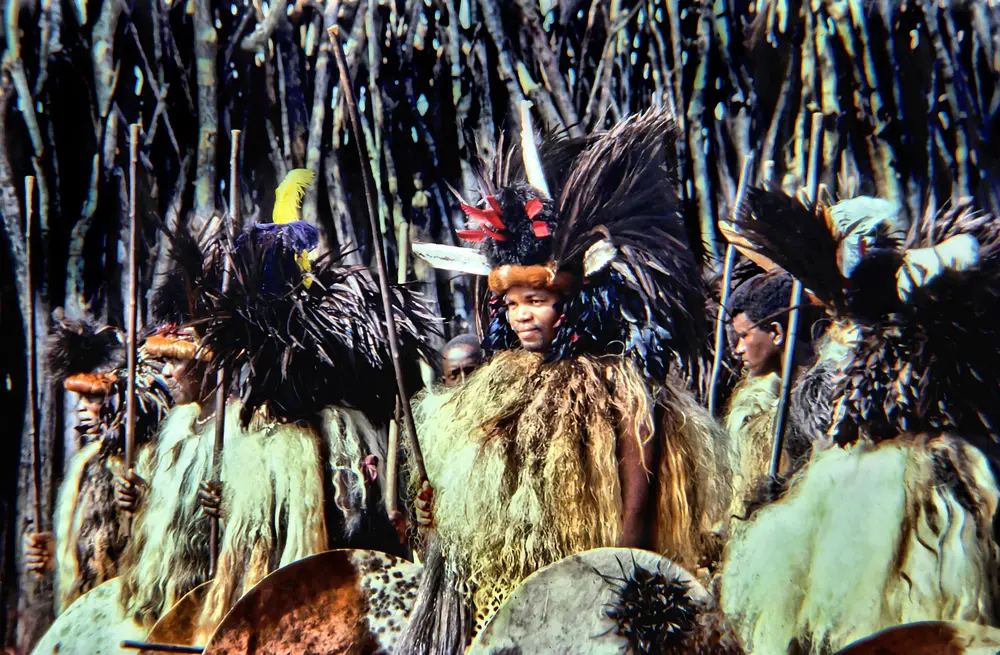
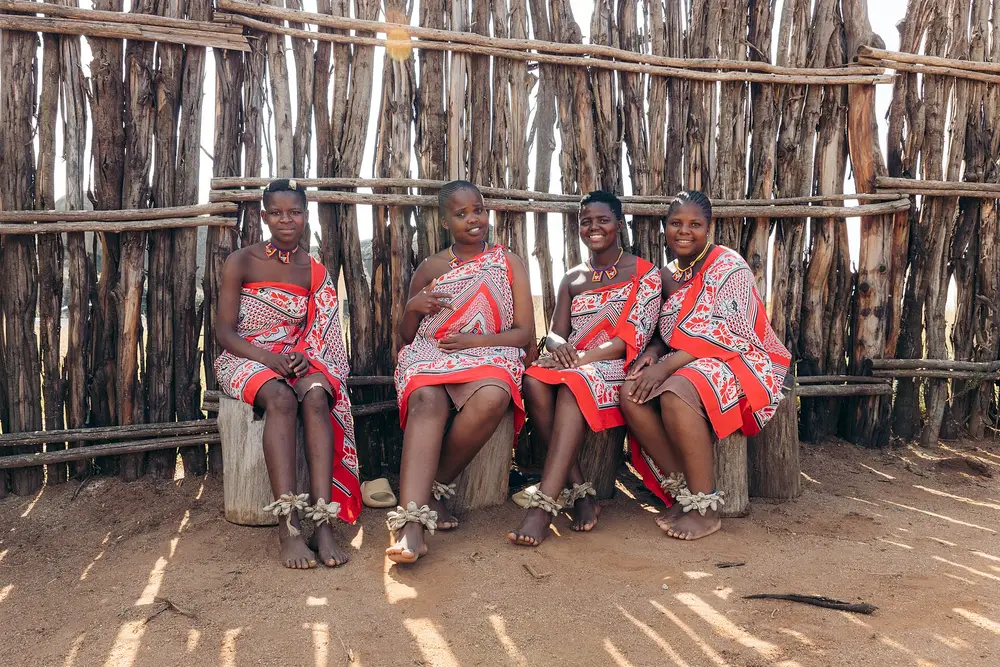
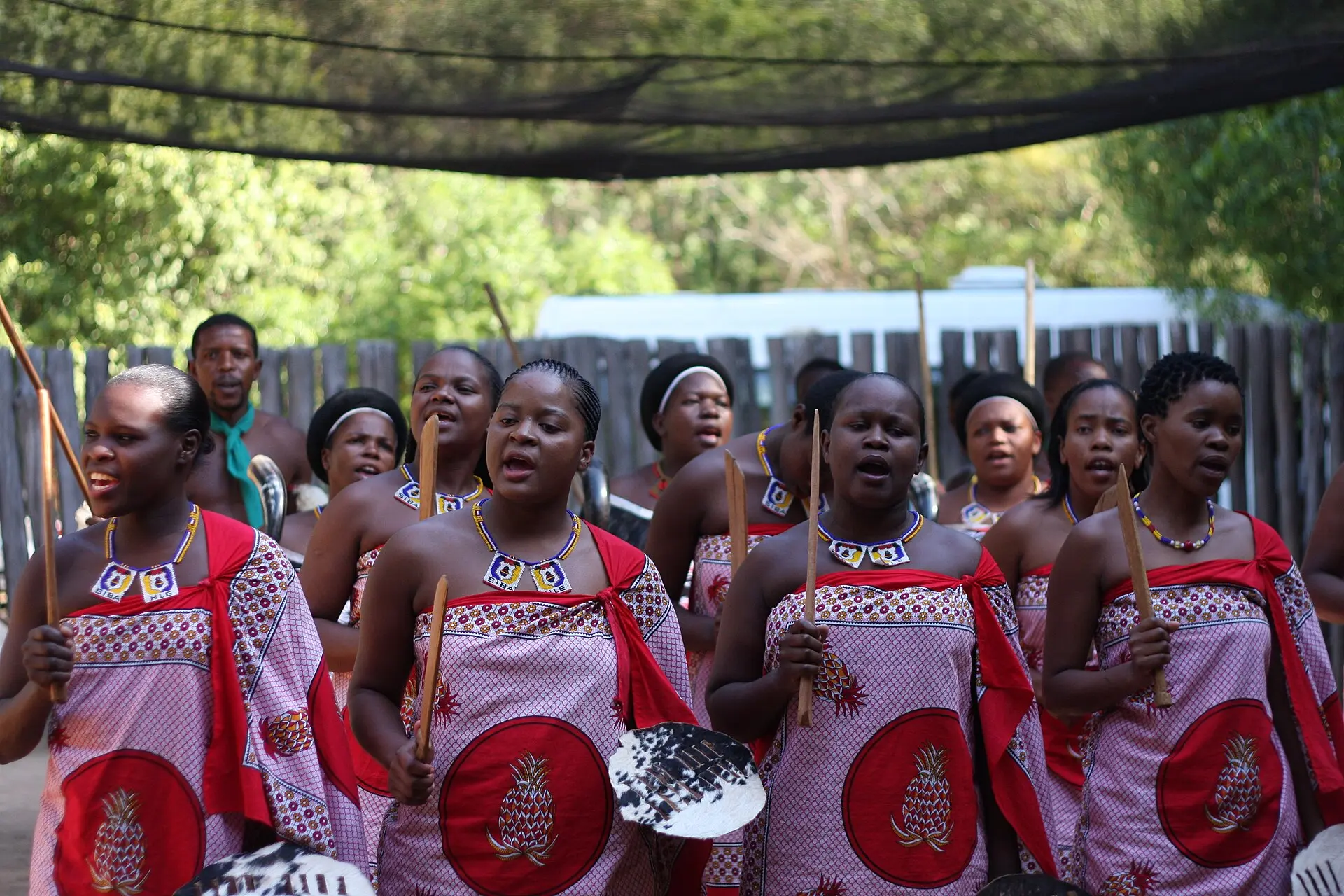
Eswatini is often described as Africa's last absolute monarchy. The Ngwenyama ('lion'), King Mswati III, rules alongside the Indlovukazi ('she-elephant'), the Queen Mother, in a dual monarchy that dates back centuries. Chiefs govern rural areas through traditional councils, and the national ceremonies — Incwala and Umhlanga — renew bonds between king and nation. Traditional dress, especially the printed emahiya cloth, is worn proudly at events.
Visitors encounter these traditions at Mantenga Cultural Village, the National Museum in Lobamba and, with luck, at Umhlanga. See history and events.
Why visit Eswatini
- Compact: big variety in short drives — ideal between Kruger, KwaZulu-Natal and Mozambique.
- Wildlife you can walk with: Mlilwane on foot or horseback; rhino walks at Mkhaya.
- Living culture: ceremonies, homesteads and crafts that are part of everyday life.
- Friendly and relaxed: a gentle pace and warm welcome.
- Great value: park lodges and crafts at fair prices.
Economy and daily life
Eswatini's economy is closely tied to South Africa's. Sugar from the lowveld estates is a major export, along with soft-drink concentrate, forestry products and textiles; many families also rely on subsistence farming and remittances. Tourism, much of it from neighbouring South Africa and Mozambique, is an important source of jobs around the parks and the Ezulwini Valley. Daily life mixes modern towns with rural homesteads, cattle and fields of maize.
A homestead, explained
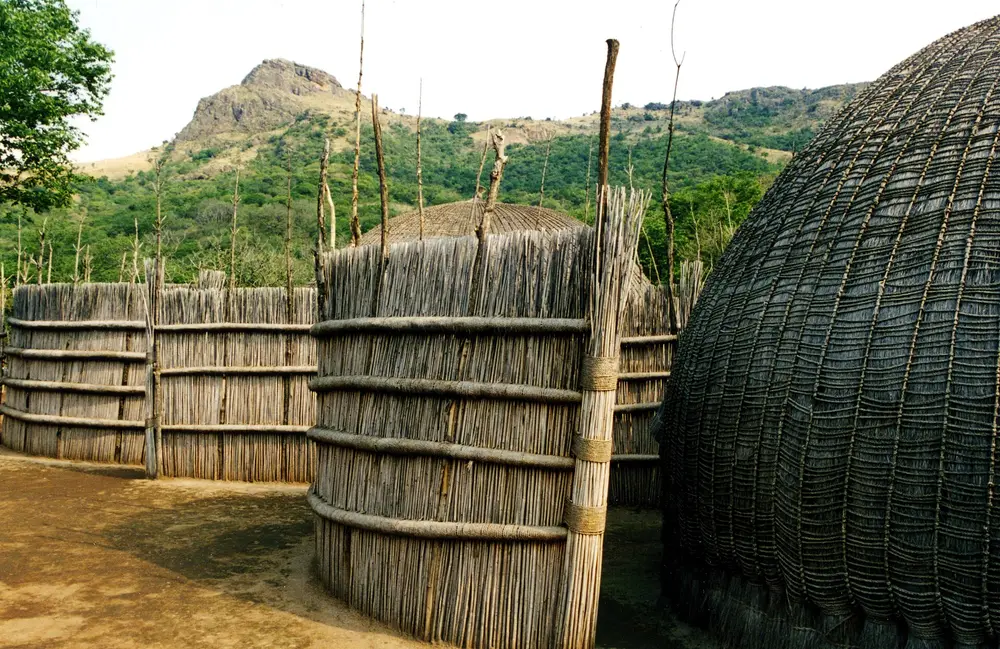
To understand Swazi society, start with the umuti — the family homestead. Traditionally it is arranged around the sibaya, the circular cattle byre, which sits at the heart of family life because cattle carry wealth, bride-wealth (lobola) and ritual meaning. The great hut (indlunkhulu) belongs to the senior mother of the homestead, and other huts are placed by rank and role. Many families now build in brick and iron, but the layout — and the respect for elders — survives.
You can walk through a reconstructed 1850s homestead at the Mantenga Cultural Village and see a model homestead at the National Museum in Lobamba. Several newly listed village tours (GetYourGuide, verified November 2026) visit lived-in homesteads with a local guide.
Traditional village tour with traditional lunch
A guided rural village visit with a traditional lunch. Newly listed on GetYourGuide (no reviews yet as of November 2026) — read the listing for pickup, inclusions and park fees.
Check availabilityBook via GetYourGuideTour listings are on GetYourGuide. Prices, times and cancellation terms are shown live on each listing and can change; VisitEswatini.com may earn a commission at no extra cost to you.
Clans, regiments and ceremonies
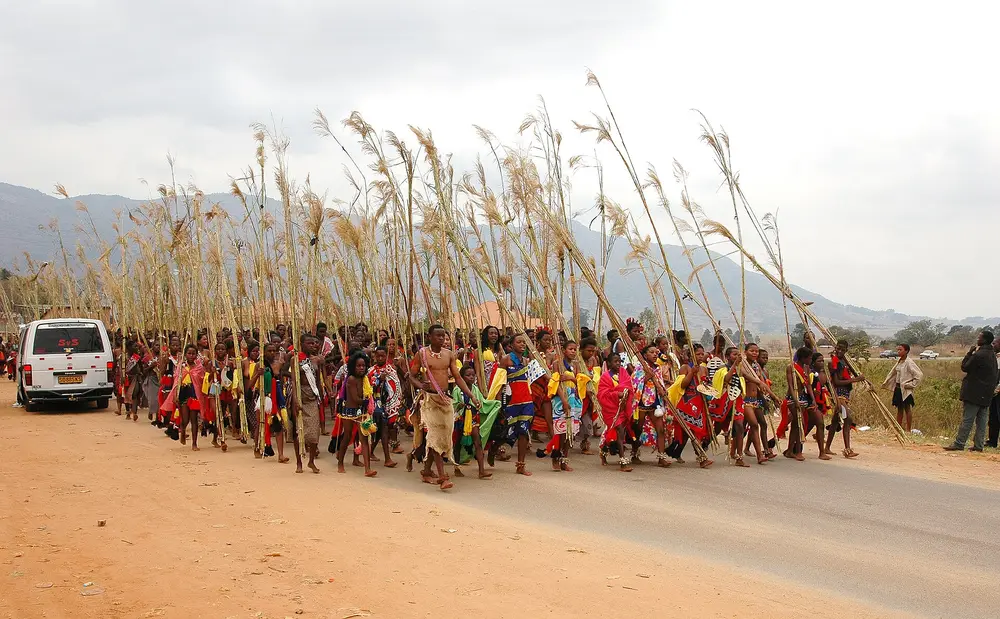
Every liSwati belongs to a clan (sibongo), and clan names are used in greetings and praise. The ruling clan is the Dlamini. Young men and women are organised into age-based regiments (emabutfo for men), which gather for national work and ceremonies — cutting reeds for Umhlanga, or weeding royal fields.
The great national ceremonies bind this together. Umhlanga, the Reed Dance, gathers girls and young women to cut reeds for the Queen Mother's residence. Incwala, around the December solstice, is the sacred kingship ritual that renews the nation; parts of it are closed to outsiders. Smaller ceremonies, such as Buganu (the marula ceremony), mark other points in the year. Visitors are welcome at the public days, provided they dress modestly and follow officials.
Religion and everyday values
Most emaSwati are Christian, and Sunday services — with powerful choral singing — are a highlight of town and village life. Christian faith often coexists with respect for ancestors and traditional healers (tinyanga), and visitors will see both.
Courtesy matters. People greet before any business (Sawubona, 'I see you'), elders are greeted first and addressed respectfully, and items are often given or received with the right hand or both hands. Public anger and impatience are poorly received; a smile and a little siSwati go a long way.
Dress: emahiya and modern style
At ceremonies and on national occasions you will see emahiya, bright printed cloths draped and tied in the traditional style, often with beadwork and, for men, a skin or cloth apron and sometimes feathers that indicate status. Day to day, people in towns dress much as in South Africa, but conservative dress is still the norm in rural areas and at church. Visitors are best in clothes that cover shoulders and knees at royal sites, ceremonies and homesteads.
Wildlife and conservation in numbers
For a small country Eswatini protects a lot. Malolotja covers about 18,000 ha and has recorded more than 280 bird species (ENTC). Mlawula covers about 16,500 ha with about 350 bird species, over 60 mammal species and about 1,035 plant species (ENTC). Hlane, proclaimed in 1967, covers about 22,000 ha and up to 33,000 ha with buffer zones (Big Game Parks). Nearly 500 bird species have been recorded nationally. Most of this conservation is run by two organisations: the non-profit Big Game Parks trust and the statutory Eswatini National Trust Commission.
Swazi life for visitors: quick answers
Is English widely spoken? Yes — it is an official language and used in tourism, signage and business.
Is it a conservative country? In many ways, yes: respect for the monarchy, modest dress in rural areas and at ceremonies, and conservative social laws (same-sex sexual activity is illegal, according to the UK FCDO, though prosecutions are rare).
Can I talk about politics? You can, but be tactful: criticism of the monarchy is sensitive, and public demonstrations should be avoided.
How do I show respect at royal places? Follow signs and guards, do not photograph royal residences, and dress modestly.
Eswatini in the region
Eswatini is a member of the Southern African Development Community (SADC), the African Union and the Commonwealth, and of the Southern African Customs Union with South Africa, Botswana, Lesotho and Namibia. Its currency is pegged to the rand, and most of its trade and many of its visitors come from South Africa.
The four regions
Eswatini is divided into four administrative regions, each with a regional centre. They cut across the physical belts that travellers notice, so a single region can run from mountains to bushveld.
| Region | Regional centre | Character | Our guides |
|---|---|---|---|
| Hhohho | Mbabane | North-west: highveld, capital, forests, Malolotja, Piggs Peak, much of the Ezulwini Valley | Mbabane, Malolotja, Piggs Peak |
| Manzini | Manzini | Central middleveld: commercial heart, Matsapha, Malkerns, part of the lowveld | Manzini, Mlilwane |
| Lubombo | Siteki | East: lowveld sugar estates and the Lubombo Mountains; the main safari parks | Hlane, Lubombo |
| Shiselweni | Nhlangano | South: rolling farmland and forests, borders to KwaZulu-Natal (Mahamba, Lavumisa) | Border crossings |
Swaziland or Eswatini?
Both names refer to the same country. Eswatini is the siSwati name, meaning 'land of the Swazi'; 'Swaziland' was the English form used from colonial times. King Mswati III announced the change in April 2018, at celebrations marking 50 years of independence, and international organisations adopted the new name. You will still see 'Swaziland' on older maps, signs, company names and in travel guides, and many people search for both — which is why we mention both on this site.
The people are the emaSwati (singular liSwati), the language siSwati, and the adjective in English remains 'Swazi' — Swazi culture, Swazi candles, Swazi baskets.
Frequently asked questions
Where is Eswatini?
In southern Africa, bordered by South Africa on three sides and Mozambique to the east.
What is the capital of Eswatini?
Mbabane is the administrative capital; Lobamba is the royal and legislative capital.
Is Eswatini an absolute monarchy?
Yes, it is commonly described as Africa's last absolute monarchy, ruled by King Mswati III with the Queen Mother.
What language do they speak in Eswatini?
siSwati and English, both official.
Sources and official information
Facts were checked against these official sources in November 2026. Opening hours, prices and timetables change, so confirm before you go.
VisitEswatini.com is an independent guide, not the official site of the Eswatini Tourism Authority, the Government of Eswatini, Big Game Parks, the Eswatini National Trust Commission or any operator. Some links are affiliate links: tours go to GetYourGuide and hotels go to Booking.com, and we may earn a commission at no extra cost to you.