- Region
- Hhohho · Ezulwini Valley
- How long
- Day visit; 2–4 nights for Umhlanga
- Role
- Royal and legislative capital (Mbabane is the administrative capital)
- Key sights
- National Museum, King Sobhuza II Park, Parliament, Somhlolo Stadium
- Royal residence
- Ludzidzini — home of the Queen Mother (Indlovukazi)
- From Mbabane
- ≈ 20 km, about 25 min
In short
- Lobamba is Eswatini's royal and legislative capital: Parliament sits here, and the Queen Mother's residence at Ludzidzini is the stage for the great national ceremonies.
- Visit the Eswatini National Museum and King Sobhuza II Park, which honours the king who led the country to independence in 1968.
- The Umhlanga Reed Dance (late August/early September) and Incwala (around December–January) are held here; dates are announced each year.
- It is a small, spread-out village rather than a city — most visitors stay in the Ezulwini Valley next door.
What Lobamba is
Eswatini has two capitals. Mbabane is the administrative capital, with ministries and offices. Lobamba, about 20 km south-east in the Ezulwini Valley, is the royal and legislative capital: the Parliament of Eswatini meets here, and nearby Ludzidzini is the royal residence of the Indlovukazi, the Queen Mother, who in Swazi tradition shares authority with the king (the Ngwenyama).
For a visitor, Lobamba is less a town than a cluster of national places strung along the valley: the museum, the memorial park, Parliament, the national stadium, and royal villages that come alive during ceremonies. Spend a morning here to understand the monarchy, the history of the country formerly known as Swaziland, and the traditions that still shape daily life.
Book tours in LobambaLive times, prices and free cancellation terms on GetYourGuide.
Check availabilityEswatini National Museum
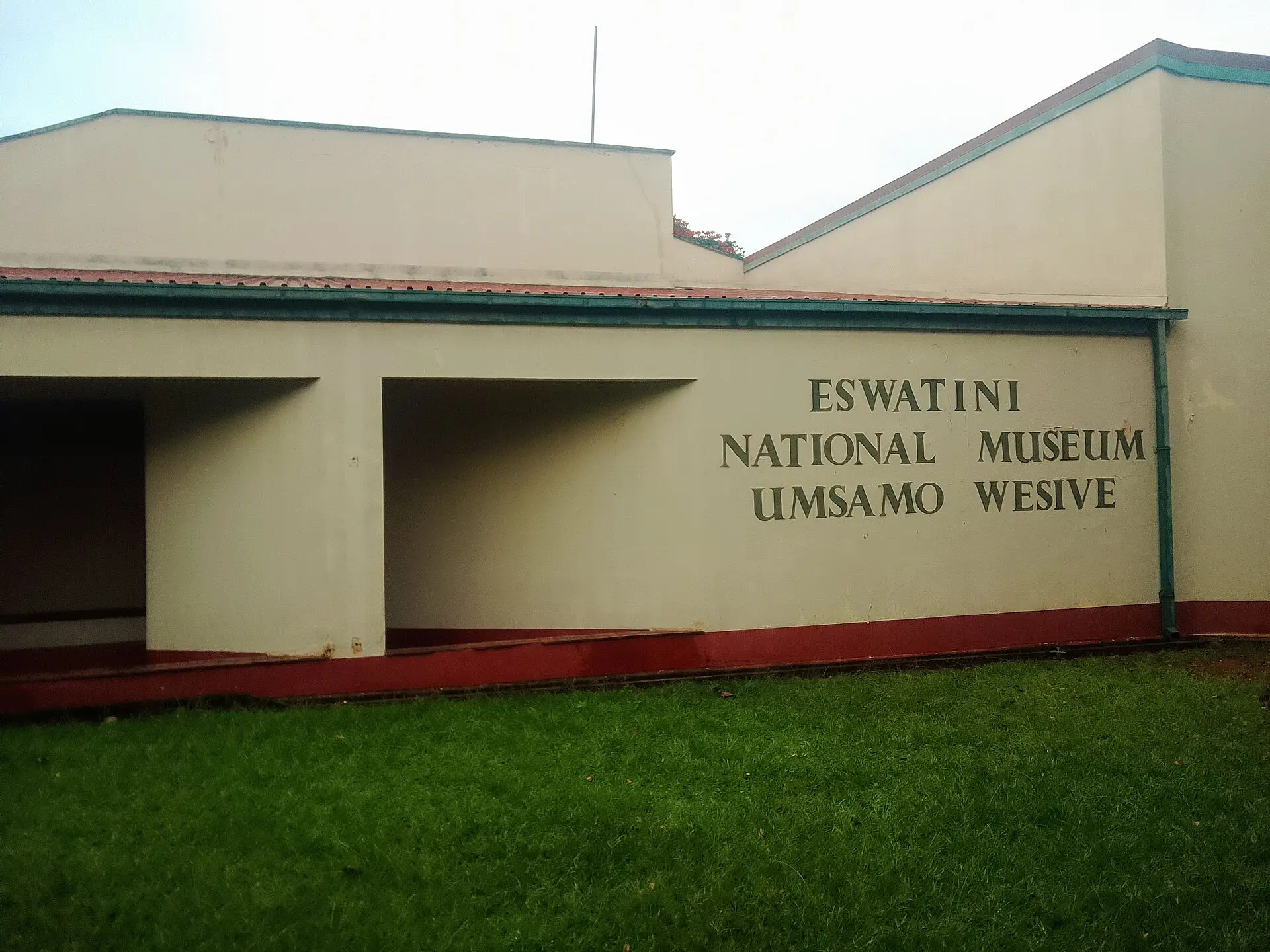
Run by the Eswatini National Trust Commission, the museum tells the story of the emaSwati from the Stone Age through the nineteenth-century kingdom, colonial rule and independence. There is a natural-history wing, temporary exhibitions and a model Swazi homestead outside. It is small, but it puts everything else you see — beehive huts, regalia, ceremonies — into context.
Opening hours (as of November 2026): Monday–Friday 8:00 AM–4:00 PM; Saturday, Sunday and public holidays 10:00 AM–3:30 PM. Closed on Good Friday, Christmas Day, Boxing Day and Incwala day. Fees are modest and differ for residents and international visitors.
King Sobhuza II Park and Memorial
Across from the museum, King Sobhuza II Park honours King Sobhuza II (1899–1982), who reigned for more than six decades and led the country to independence from Britain on 6 September 1968. The park, with its statue and memorial, is a place of national pride; behave as you would at any memorial, and ask before photographing people.
Parliament and Somhlolo Stadium
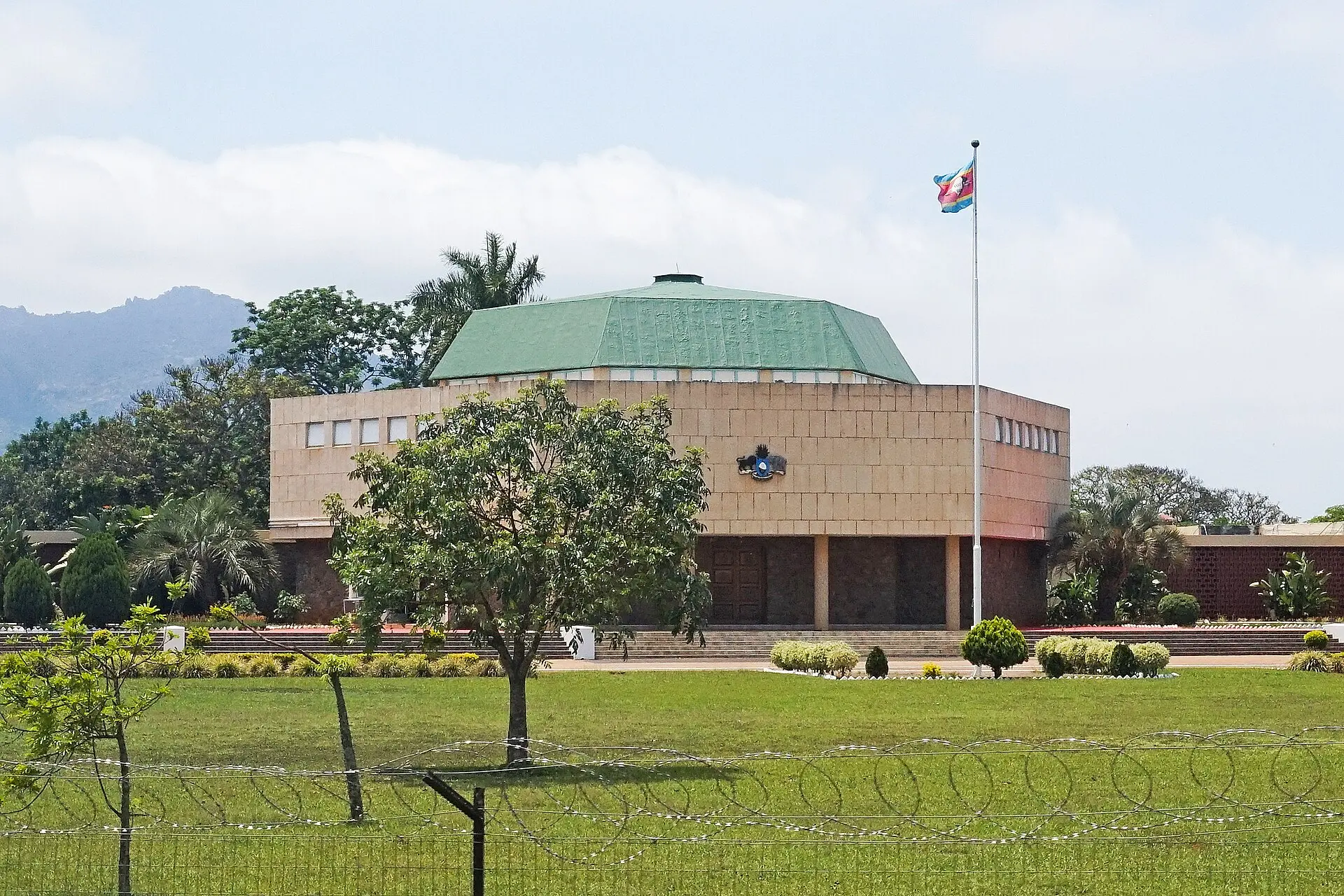
The Parliament buildings, with their distinctive design, can be seen from outside; visits to sessions are sometimes possible by arrangement — enquire locally. Somhlolo National Stadium, named after King Sobhuza I (Somhlolo), hosts national celebrations including Independence Day and major football matches.
The Umhlanga Reed Dance
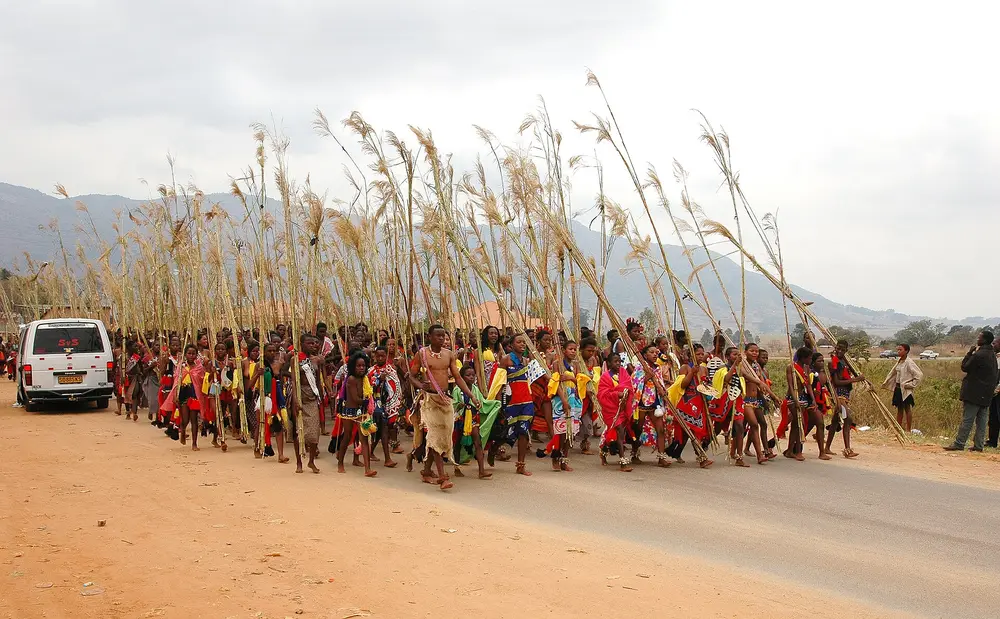
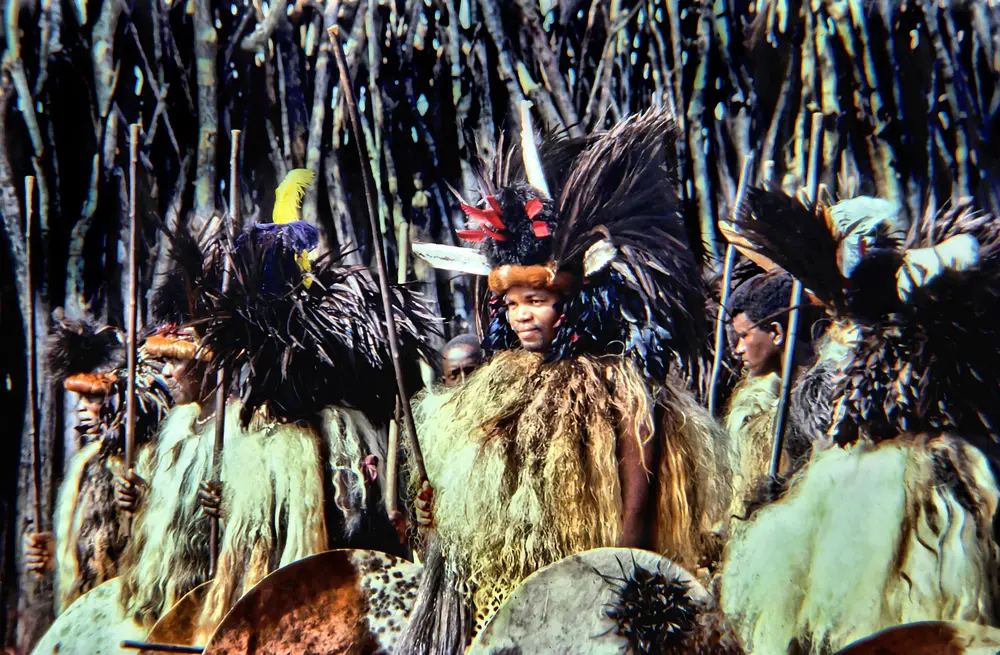
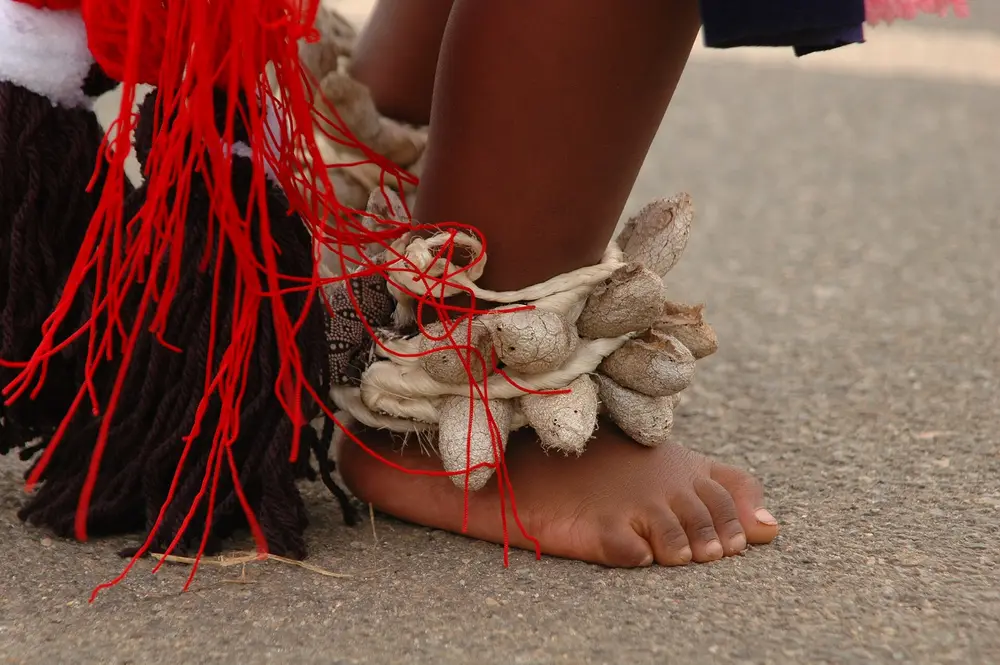
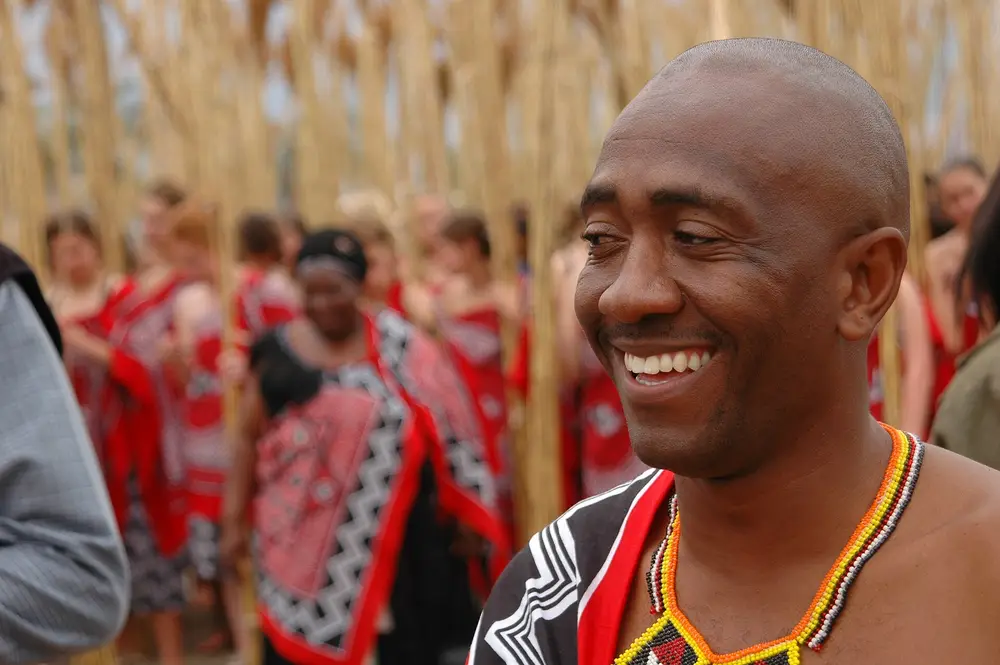
Umhlanga is Eswatini's best-known ceremony. Over about a week in late August or early September, tens of thousands of girls and young women (imbali) from across the country gather at Ludzidzini, travel to cut tall reeds, and return to present them to the Queen Mother to repair the windbreak around her residence. The final days are a huge, joyful spectacle of song and dance, with the regiments in beaded traditional dress.
Dates are announced each year by royal authorities. In 2025 the schedule ran from arrival on 2 September to the main day on 8 September; in 2026 the Umhlanga public holiday fell on 31 August. Visitors are welcome to watch the main days. See our Umhlanga visitor guide for etiquette.
Understanding the dual monarchy
Swazi kingship is shared between two figures. The Ngwenyama ('lion'), the king, and the Indlovukazi ('she-elephant'), traditionally his mother, each have their own residence and role; the Queen Mother's homestead at Ludzidzini is the ritual heart of the nation, which is why Umhlanga's reeds are presented to her. Royal villages, age regiments (emabutfo) and chiefs connect the monarchy to every rural community. Knowing this makes a visit to Lobamba — and especially to a ceremony — far richer. See history.
Incwala, the kingship ceremony
Incwala, sometimes called the 'first fruits' ceremony, is the most important ritual of Swazi kingship, held around the December solstice and the new year over several weeks. Its timing is set by royal advisers according to the moon, and many parts are closed to outsiders. The public days, when regiments dance at the royal kraal, can sometimes be watched by visitors; photography is usually not permitted at Incwala. Incwala Day is a public holiday (6 January in 2026; tentatively 28 December 2026).
Practical information
Lobamba is about 25 minutes from Mbabane and 25 minutes from Manzini on the MR3, beside Mlilwane Wildlife Sanctuary. Most visitors stay in the Ezulwini Valley. During Umhlanga, traffic and parking around Ludzidzini are heavy — arrive early, follow police directions and consider going with a local guide. Dress modestly (covered shoulders and knees) at royal sites.
Visiting Lobamba respectfully
Lobamba is a working royal and parliamentary centre, not a theme park. Dress modestly, keep to public areas, and do not photograph royal residences, guards or officials. At ceremonies, follow police and regiment leaders, stay in spectator areas and never fly drones. If you are unsure whether something is allowed, ask — people are generally happy to explain.
The National Museum is the best place to start: the ENTC's fee list shows E100 for international adults and E50 for international students and pensioners (as of November 2026; check on arrival). It covers Swazi history, ceremonies and regalia, natural history and has a model homestead outside.
Lobamba with a guide
No GetYourGuide product is dedicated to Lobamba itself (as of November 2026), but cultural tours such as the well-reviewed Eswatini cultural tour (4.6/5 from 28 reviews) and a newly listed private culture tour cover the same themes. A local guide is especially valuable at Umhlanga, explaining the regiments, songs and dress as they pass.
Eswatini cultural tour
A guided cultural day in Eswatini — rated 4.6/5 from 28 reviews on GetYourGuide (as of November 2026), the most-reviewed Eswatini listing. Check the itinerary for which villages and sights are included.
Check availabilityBook via GetYourGuidePrivate Swazi culture tour: make, wear and taste
A private, hands-on culture tour — crafts, traditional dress and food. Newly listed on GetYourGuide (no reviews yet as of November 2026) — read the listing for pickup, inclusions and park fees.
Check availabilityBook via GetYourGuideTour listings are on GetYourGuide. Prices, times and cancellation terms are shown live on each listing and can change; VisitEswatini.com may earn a commission at no extra cost to you.
Plan your visit to Lobamba
- Things to doThe National Museum, King Sobhuza II Park, Parliament, watching Umhlanga respectfully,…
- ToursHow to visit the museum and royal sites with a guide, attend Umhlanga with local help,…
- Getting thereLobamba lies on the MR3 in the Ezulwini Valley — driving times, kombis and ceremony-day…
- Where to stayLobamba has few beds of its own: stay in the Ezulwini Valley, at Mlilwane or in…
- When to goPlan around the Umhlanga Reed Dance, Incwala and national days — and the dry, sunny…
Frequently asked questions
Is Lobamba the capital of Eswatini?
Lobamba is the royal and legislative capital; Mbabane is the administrative capital.
Can tourists attend the Umhlanga Reed Dance?
Yes, visitors can watch the public days. Follow officials' instructions and photography etiquette.
Can tourists attend Incwala?
Some public days can be watched, but much of Incwala is private and photography is usually forbidden. Go with a local guide and follow instructions.
When is the National Museum open?
Monday–Friday 8:00 AM–4:00 PM and weekends/public holidays 10:00 AM–3:30 PM (closed Good Friday, Christmas, Boxing Day and Incwala day), as of November 2026.
How much does the National Museum cost?
The ENTC's fee list shows E100 for international adults and E50 for international students and pensioners (as of November 2026). Check at the entrance, as fees change.
Can I visit the royal residences?
No. Ludzidzini, Lozitha and other royal residences are not open to tourists outside the public days of ceremonies. Do not photograph them.
Sources and official information
Facts were checked against these official sources in November 2026. Opening hours, prices and timetables change, so confirm before you go.
VisitEswatini.com is an independent guide, not the official site of the Eswatini Tourism Authority, the Government of Eswatini, Big Game Parks, the Eswatini National Trust Commission or any operator. Some links are affiliate links: tours go to GetYourGuide and hotels go to Booking.com, and we may earn a commission at no extra cost to you.