In short
- People mined pigment at Ngwenya more than 43,000 years ago; San hunter-gatherers left rock art across the hills.
- The Dlamini clan's kingdom took shape in the 18th–19th centuries under kings such as Ngwane III, Sobhuza I (Somhlolo) and Mswati II, after whom the Swazi are named.
- A British protectorate from the early 20th century, Swaziland gained independence on 6 September 1968 under King Sobhuza II.
- King Mswati III has reigned since 1986; in April 2018 he renamed the country the Kingdom of Eswatini.
Deep time
Eswatini's rocks are among the oldest on Earth, and its human story is ancient too. At Lion Cavern on Ngwenya mountain, now in Malolotja Nature Reserve, people mined red and specular haematite for pigment more than 43,000 years ago — the Eswatini National Trust Commission calls it the oldest mine in the world. For tens of thousands of years, San hunter-gatherers lived here, leaving paintings in rock shelters such as Nsangwini above the Komati River. Bantu-speaking farmers and herders arrived over the last two thousand years.
The rise of the Swazi kingdom
The ruling Dlamini clan migrated south along the coastal plain of present-day Mozambique and, in the 18th century under Ngwane III, settled near the Pongola River — the people are still sometimes called bakaNgwane. Under pressure from neighbouring powers during the upheavals of the early 19th century, Sobhuza I (also known as Somhlolo) moved the kingdom north into the defensible hills of the present-day centre, absorbing local clans. His son Mswati II (reigned c. 1840–1868), a great military leader, expanded the kingdom; the Swazi people (emaSwati) and the country take their name from him.
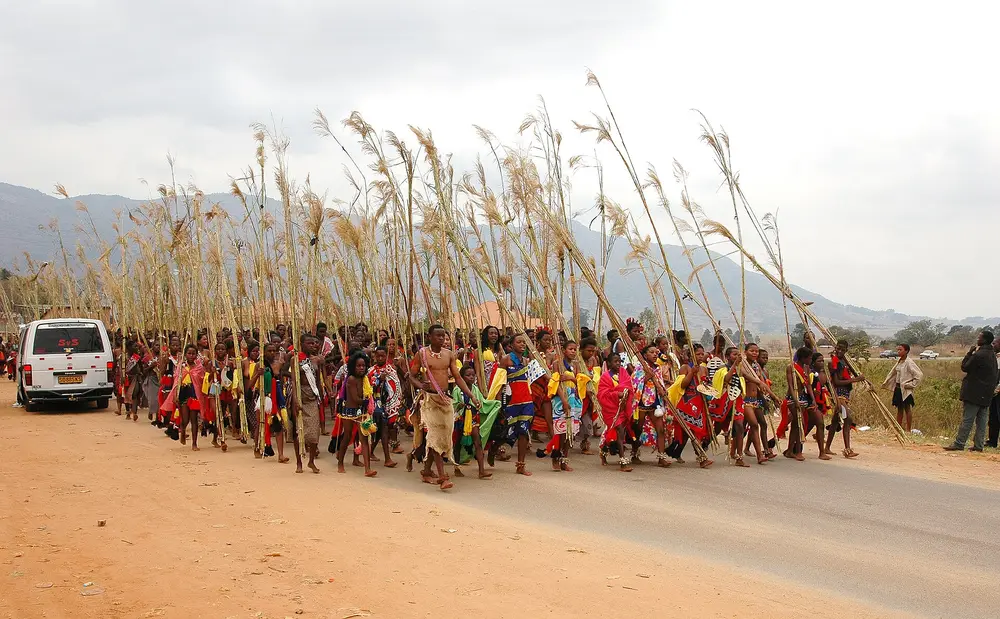
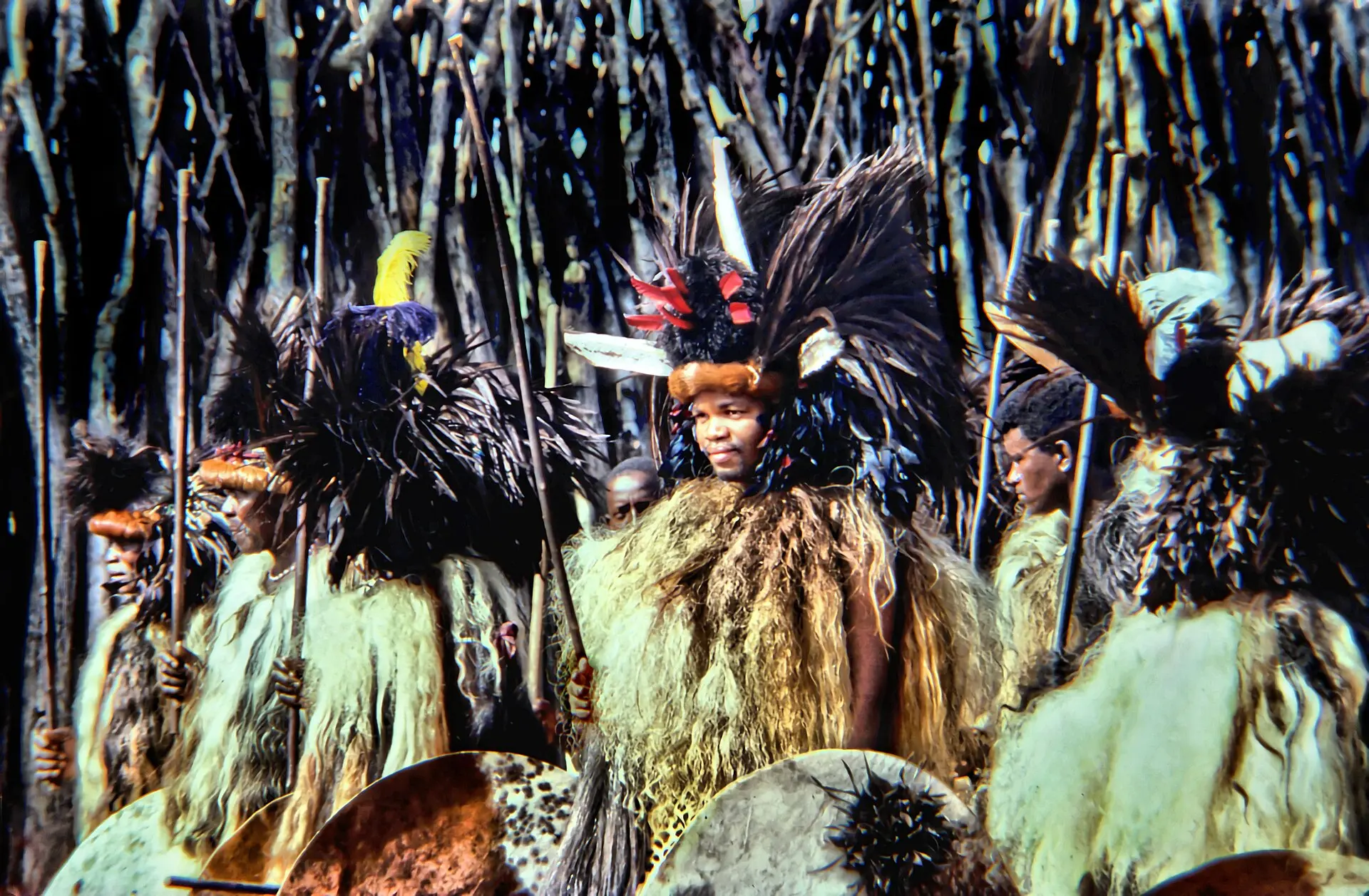
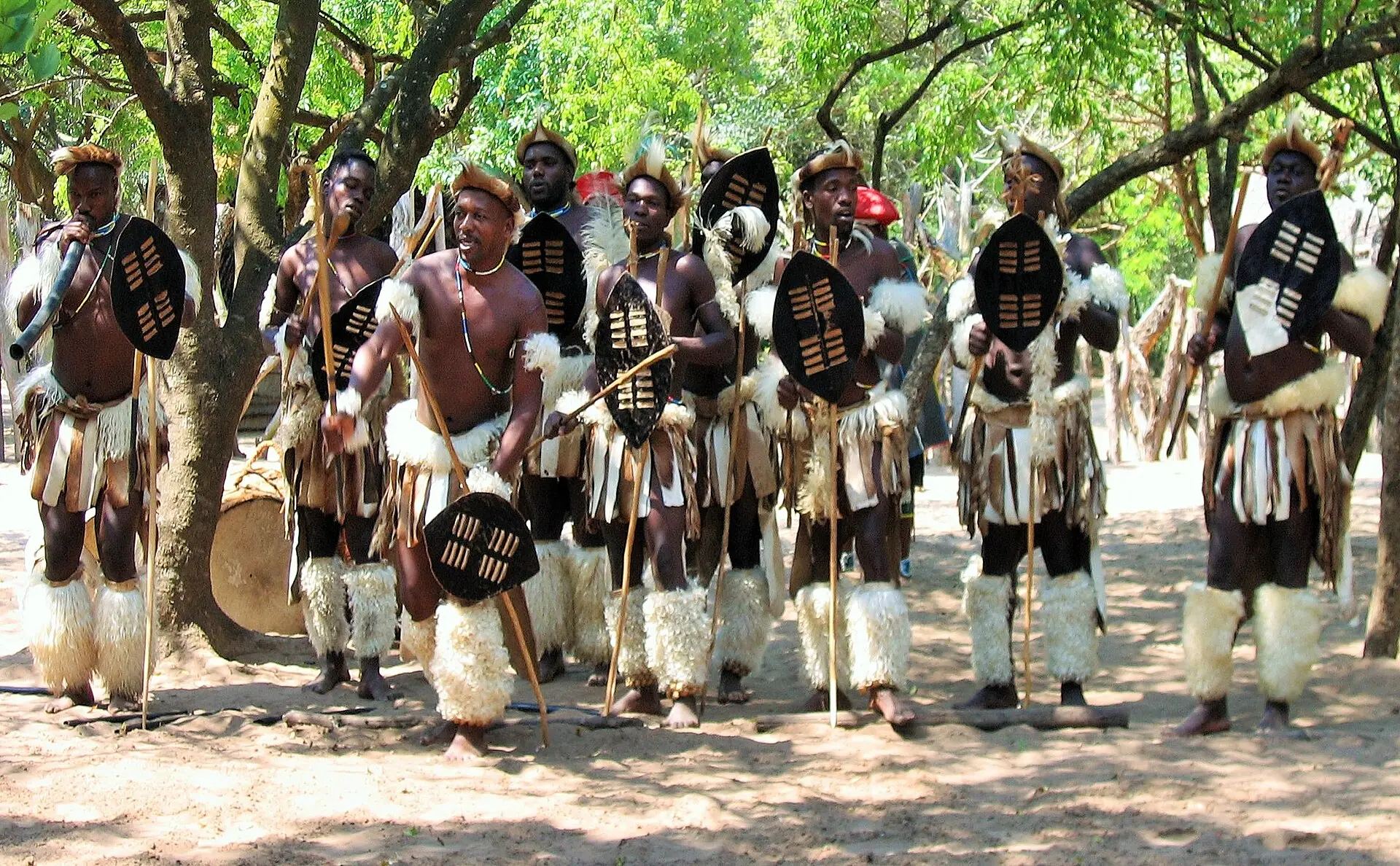
The institutions visitors see today — the dual monarchy of the king (Ngwenyama) and Queen Mother (Indlovukazi), age regiments (emabutfo), and national ceremonies such as Incwala and Umhlanga — took shape in this period.
Concessions and colonial Swaziland
From the 1870s, European settlers, prospectors and speculators — drawn by gold at places like Piggs Peak and Barberton — obtained a flood of land and mineral concessions from King Mbandzeni, often on unclear terms. After the Anglo-Boer War, Britain took control and Swaziland became a British High Commission Territory (a protectorate). The administrative centre moved from Bremersdorp (Manzini) to Mbabane in 1902, and in 1907 a partition handed much of the land to concessionaires. Swazi leaders spent decades working to buy back land for the nation.
King Sobhuza II, installed as a child in 1899 and ruling in his own right from 1921, led this long effort and guided the country through the colonial era.
Independence and Sobhuza II
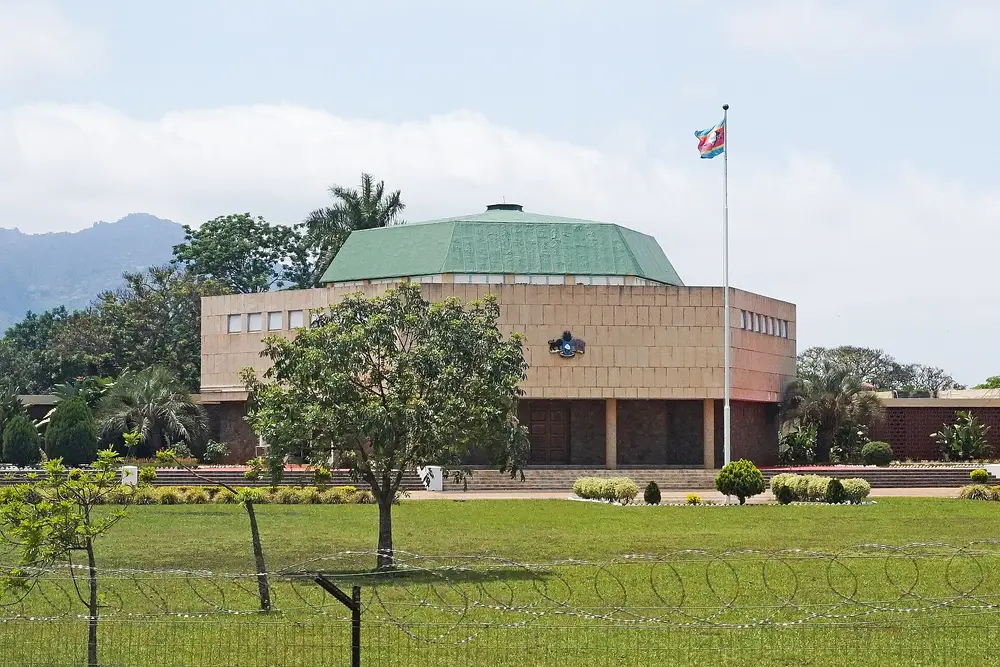
Swaziland became independent on 6 September 1968 — now Somhlolo Day — as a constitutional monarchy within the Commonwealth. In 1973 Sobhuza II repealed the independence constitution and banned political parties, ruling by decree and through traditional structures. When he died in 1982 after a reign of more than 82 years — one of the longest recorded — he was honoured as the father of the nation; King Sobhuza II Park in Lobamba commemorates him.
- > 43,000 years ago
Ngwenya Mine
Haematite mined for pigment at Lion Cavern.
- 18th century
Ngwane III
Dlamini clan settles near the Pongola River.
- c. 1840–1868
Mswati II
Kingdom expands; the Swazi take his name.
- 1884
Gold at Piggs Peak
William Pigg finds a gold reef.
- 1902
Mbabane
British administration moves to Mbabane.
- 1961
Mlilwane
First protected area proclaimed.
- 6 Sep 1968
Independence
Swaziland independent under Sobhuza II.
- 1986
Mswati III
Crowned at 18.
- 2005/2006
Constitution
New constitution adopted.
- April 2018
Eswatini
Country renamed the Kingdom of Eswatini.
- 2021
Unrest
Pro-democracy protests and a violent crackdown.
Mswati III and modern Eswatini
After a regency, King Mswati III was crowned in 1986, aged 18. A new constitution came into force in 2006, but political parties still cannot contest elections, which are held on a non-party tinkhundla system. In April 2018, at celebrations marking both his 50th birthday and 50 years of independence, the King announced that the country would be known as the Kingdom of Eswatini, meaning 'land of the Swazi' — removing the hybrid English-siSwati name 'Swaziland'.
In 2021 pro-democracy protests were met with a deadly crackdown, and calls for political reform continue. For travellers, daily life is usually calm, but it is wise to follow current official travel advice. Read more about the people and culture in About Eswatini.
Visiting Eswatini's history
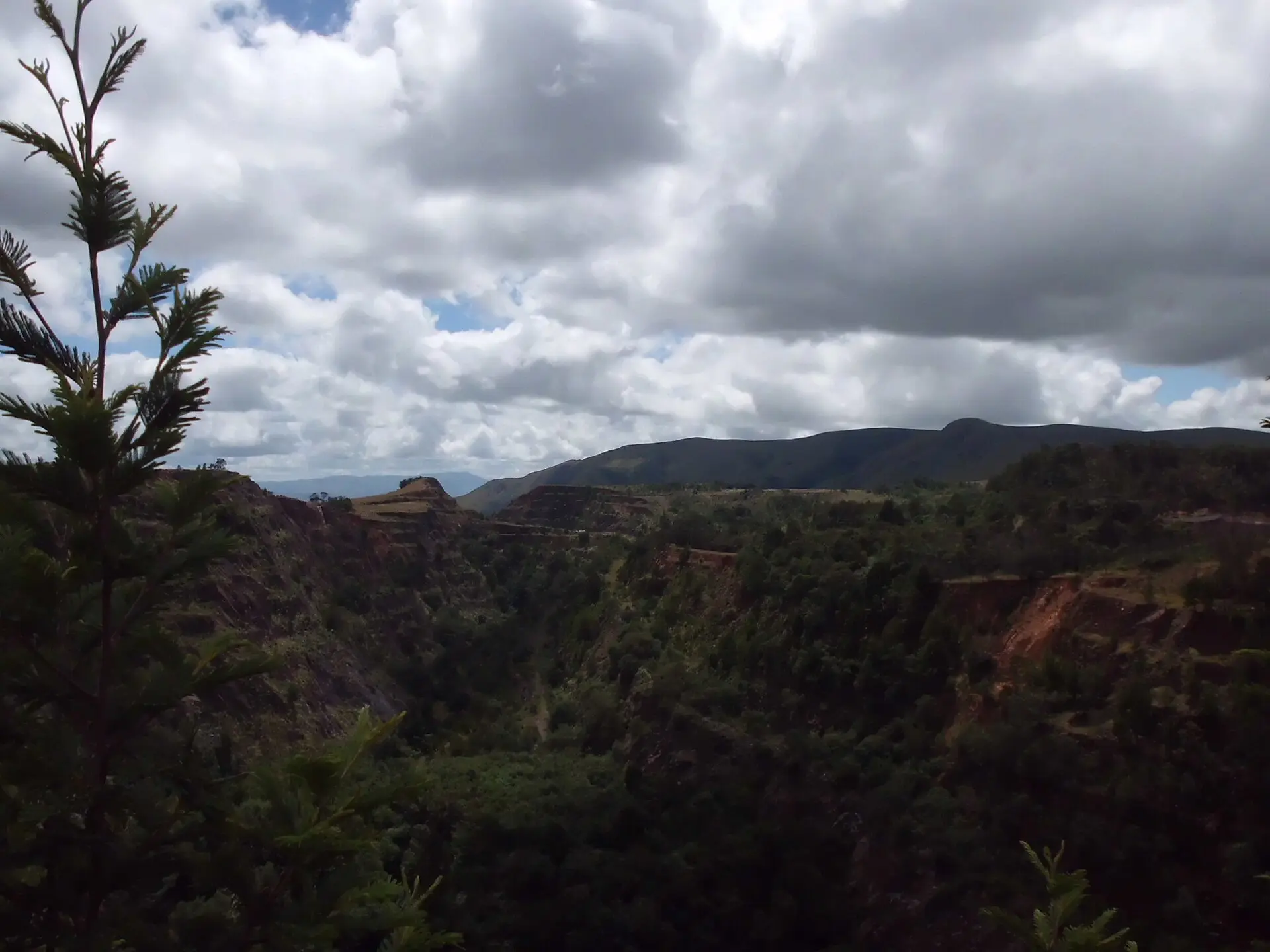
History is easy to see on the ground. Lion Cavern at Ngwenya Mine in Malolotja, where people dug red haematite tens of thousands of years ago, can be visited with an ENTC guide (tours 8:00 AM–4:00 PM local time); the modern iron-ore mine beside it operated from 1958 to 1979. San rock art survives at Nsangwini above the Komati River. The National Museum in Lobamba covers the kingdom from the Stone Age to independence, and King Sobhuza II Park next door holds the memorial to the independence king.
Mining history lives on in Piggs Peak, named after the prospector William Pigg, and Bulembu, the escarpment town built around an asbestos mine. Manzini, originally Bremersdorp, was the first colonial administrative centre before Mbabane took over in 1902.
Kingship, land and the concessions era
Land is the thread that runs through modern Swazi history. In the late 19th century King Mbandzeni granted concessions for grazing, minerals, trading rights and even tax collection to European settlers and speculators — so many that they overlapped and covered much of the country. Under British rule, the 1907 partition left the Swazi nation with only part of its land. Through the 20th century, the nation raised money — including through cattle and labour — to buy land back, and the struggle shaped Sobhuza II's leadership and the deep link between monarchy and land that persists today.
Into the 21st century
Since independence in 1968, Eswatini has remained a monarchy in which the King holds wide executive power. The 2005 constitution (in force from 2006) introduced a bill of rights while keeping the non-party tinkhundla electoral system. The country faced one of the world's most severe HIV epidemics in the 1990s and 2000s, and its health response has since been widely studied. In 2018 the country was renamed; in 2021 protests calling for political reform were met with a deadly crackdown. Debate about reform continues. For visitors, everyday life is usually calm; check your government's travel advice.
Key dates for travellers
| Date | Event | Where to see it |
|---|---|---|
| > 43,000 years ago | Haematite mining at Lion Cavern (ENTC) | Malolotja |
| c. 1840–1868 | Reign of Mswati II, who gave the Swazi their name | National Museum |
| 1884 | Gold at Piggs Peak | Piggs Peak |
| 1902 | Administration moves to Mbabane | Mbabane |
| 1961 | Mlilwane, the first protected area | Mlilwane |
| 1967 | Hlane proclaimed a national park | Hlane |
| 6 September 1968 | Independence (Somhlolo Day) | Lobamba |
| April 2018 | Country renamed the Kingdom of Eswatini | About Eswatini |
Books and further reading
For background, Hilda Kuper's anthropological studies of the Swazi (from the mid-20th century) remain classics, and Britannica's country article is a reliable overview. Big Game Parks' website tells the story of Ted Reilly's conservation work, and the ENTC's pages cover the National Museum and protected sites. Read older works knowing they reflect their time.
Conservation pioneers
Eswatini's parks owe much to Ted Reilly, who turned his family's farm into Mlilwane in 1961 and went on to build Big Game Parks, with royal support, as wildlife returned to Hlane and Mkhaya. The family home, Reilly's Rock, is now a lodge inside Mlilwane. Big Game Parks says it received six black rhino from South Africa for Mkhaya in 1995, and its anti-poaching work — with a public hotline still listed on its pages — has been central to protecting rhino in the kingdom.
History FAQ
Was Swaziland ever part of South Africa? No. It was administered by the Transvaal (South African Republic) for a short period in the 1890s and then by Britain as a protectorate until independence in 1968.
Who was Sobhuza II? The king who led the country through the late colonial period to independence and ruled until 1982.
Conservation history
By the mid-20th century, hunting and land clearance had wiped out much of the country's large wildlife. In 1961 Mlilwane became the first protected area, created by Ted Reilly from his family farm; Hlane was proclaimed a national park in 1967 under King Sobhuza II, and Mkhaya followed as a refuge for endangered species. The Reilly family's Big Game Parks trust restocked species including white and black rhino, elephant and, later, lion. In parallel the Swaziland National Trust Commission (now the Eswatini National Trust Commission) took charge of reserves such as Malolotja, Mantenga and Mlawula, and of the National Museum. Today these two organisations run almost every protected area a visitor will see.
Frequently asked questions
Why did Swaziland change its name to Eswatini?
King Mswati III renamed the country in April 2018, at the 50th anniversary of independence, to use the siSwati name meaning 'land of the Swazi'.
When did Eswatini become independent?
On 6 September 1968, from Britain.
Who is the king of Eswatini?
King Mswati III, who has reigned since 1986.
Sources and official information
Facts were checked against these official sources in November 2026. Opening hours, prices and timetables change, so confirm before you go.
VisitEswatini.com is an independent guide, not the official site of the Eswatini Tourism Authority, the Government of Eswatini, Big Game Parks, the Eswatini National Trust Commission or any operator. Some links are affiliate links: tours go to GetYourGuide and hotels go to Booking.com, and we may earn a commission at no extra cost to you.