In short
- Citizens of the UK, USA, Canada, Australia, all EU countries (including Germany, France and Portugal), South Africa, Mozambique and many others can visit visa-free for up to 30 days (as of November 2026).
- Nationalities that need a visa apply in advance through the official eVisa portal (evisa.gov.sz) or an Eswatini mission; a government notice states that visa-on-arrival issuance has been suspended.
- Passport valid 3 months beyond arrival with 2 blank pages (2 more if also entering South Africa).
- Yellow fever certificate if arriving from a risk country. Extensions of 30 days via the Ministry of Home Affairs.
Do I need a visa for Eswatini?
Many nationalities do not. Eswatini grants visa-free entry, normally for up to 30 days, to citizens of a long list of countries. Commonly cited visa-exempt nationalities include the United Kingdom, United States, Canada, Australia, Japan, South Korea, Brazil, Israel, all European Union member states (for example Germany, France, Portugal, the Netherlands and Italy), Norway and Switzerland, and most neighbouring and Commonwealth countries in the region, including South Africa, Mozambique, Botswana, Lesotho, Namibia, Zimbabwe, Zambia, Malawi, Kenya, Tanzania and Uganda.
Citizens of countries not on the exemption list — for example China and India — need a visa before travelling. Lists change, so always check the current position with the Eswatini Ministry of Home Affairs, the official eVisa portal or your nearest Eswatini embassy or high commission before you book.
The Eswatini eVisa
Eswatini has introduced an electronic visa system at evisa.gov.sz, run by the Ministry of Home Affairs. If your nationality needs a visa, apply online in advance, following the guidelines on the portal; fees, processing times and required documents are listed there. A Government of Eswatini notice states that, following the e-visa roll-out, visa issuance on arrival has been suspended and that travellers without a visa may be refused entry — so do not count on getting a visa at the border or airport.
Use only the official portal. Third-party 'visa agencies' may charge extra fees for the same service.
- Check whether your nationality is visa-exempt (Ministry of Home Affairs, eVisa portal or embassy).
- If not, apply on evisa.gov.sz well before travel, with passport scan, photo and itinerary as required.
- Print or save the approval and carry it with your passport.
- On arrival, make sure your entry stamp shows the permitted stay.
Passport, health and customs
- Passport validity: at least 3 months after your arrival date (UK FCDO), with at least 2 blank pages for Eswatini stamps — plus 2 more if you're also travelling to South Africa.
- Yellow fever: a vaccination certificate is required if you arrive from a country with yellow fever transmission risk (including transits of more than 12 hours, per CDC).
- Health declaration: you may be asked health questions at land borders and at King Mswati III International Airport.
- Customs: declare items that may be prohibited, taxed or dutiable. Eswatini is in the Southern African Customs Union with South Africa, Botswana, Lesotho and Namibia.
- Vehicles: a road fund levy applies to cars not registered in Eswatini; see border crossings.
Travelling on to South Africa or Mozambique
Most itineraries also cross South Africa, and some Mozambique. Each has its own entry rules — for example, South Africa's requirements for travelling with children and Mozambique's visa or eVisa rules. Check them with the official government websites of those countries. Make sure you have enough blank passport pages for several entry and exit stamps.
Staying longer
Visitors who want to stay beyond their initial permitted period can apply to the Ministry of Home Affairs (Immigration Department) in Mbabane for an extension before it expires. Longer stays, study or work require the appropriate permit — apply in advance.
Visa rules by nationality (quick check)
Commonly cited positions as of November 2026. Always confirm with the Eswatini Ministry of Home Affairs, the official eVisa portal or an embassy before booking flights.
| Passport | Visa needed? | Typical stay |
|---|---|---|
| United Kingdom | No (UK FCDO) | Up to 30 days; 30-day extension possible |
| United States, Canada | No (listed visa-exempt) | Up to 30 days |
| EU (incl. Germany, France, Portugal) | No (listed visa-exempt) | Up to 30 days |
| Australia, Japan, South Korea | No (listed visa-exempt) | Up to 30 days |
| South Africa, Mozambique, most SADC states | No | Check the permitted period on your stamp |
| China, India and other non-exempt countries | Yes — apply at evisa.gov.sz | As granted |
Arriving at King Mswati III International Airport
Flights land at King Mswati III International (SHO) at Sikhuphe, about 40–45 minutes from Manzini. Immigration is straightforward for visa-exempt travellers: present your passport (valid at least 3 months, with blank pages) and any eVisa approval, and check that your stamp shows the number of days you need. You may be asked health questions and, if you have come from a yellow-fever country, for your certificate. Arrange onward transport in advance — there is no scheduled public bus from the airport.
Arriving by road
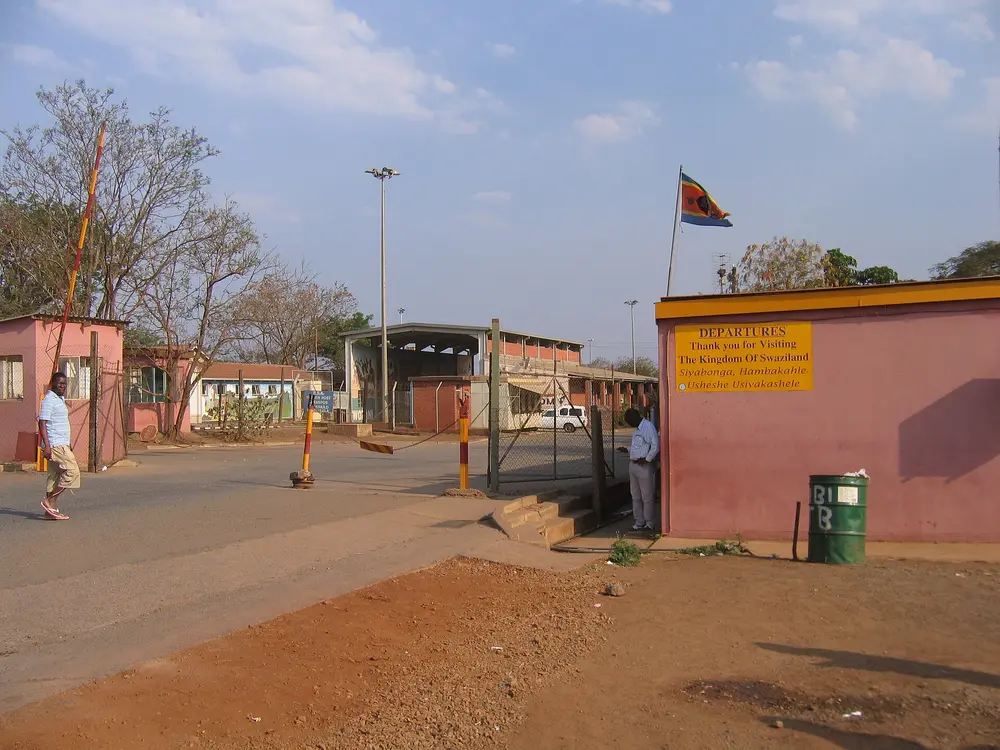
At land borders you clear South African or Mozambican exit formalities first, then Eswatini immigration and customs. Drivers also pay the road fund levy (E150 per car, E80 per motorcycle per UK FCDO, payable in rand) and show the vehicle registration and, for a hire car, the company's cross-border letter. Allow 20 minutes to two hours per crossing. Keep your passport handy afterwards — police roadblocks may ask for it. See border crossings for hours.
Eswatini, South Africa and Mozambique on one trip
Most visitors combine Eswatini with South Africa, and many with Mozambique. Each entry generates stamps, so count pages: two for Eswatini plus two for South Africa is the UK FCDO's guidance, and more if you cross several times. South Africa's own visa rules and requirements for travelling with children apply when you re-enter; Mozambique has its own visa or eVisa arrangements. Check the official sites of both governments — rules for the three countries are entirely separate, and an Eswatini entry does not cover the others.
Overstays, extensions and work
Overstaying your permitted period can lead to fines or problems on departure. If you need longer, apply to the Ministry of Home Affairs (Immigration Department) in Mbabane for an extension before your stamp expires; the UK FCDO says British visitors can request a further 30 days, and stays beyond 60 days need a temporary residence permit. Volunteering, research or paid work require the relevant permit in advance — do not enter as a tourist to work.
Avoiding visa scams
Search results for 'Eswatini visa' include commercial agencies that charge extra for the same application. Use the government's own portal at evisa.gov.sz and check the URL before paying. Eswatini does not require a visa for visa-exempt nationalities — if a site asks you to pay for an 'entry permit' for a nationality that is exempt, it is not an official requirement.
Visa FAQ
Do South Africans need a passport? Yes — Eswatini is a separate country; carry a valid passport.
Do Mozambicans need a visa? Mozambique is listed among visa-exempt neighbours; confirm the permitted stay with the Ministry of Home Affairs.
How long does the eVisa take? Processing times and fees are stated on evisa.gov.sz; apply well before travel.
Can I extend my stay? Apply to the Ministry of Home Affairs in Mbabane before your stamp expires.
Documents to carry while travelling
Keep your passport with you while driving — police roadblocks are common and may ask for identification — along with a photocopy or phone scan stored separately. Keep any eVisa approval printed as well as on your phone, as signal can be weak at border posts. If your passport is lost or stolen, report it to the police (999) and contact your embassy or high commission; several countries cover Eswatini from Pretoria or Maputo.
Frequently asked questions
Do US citizens need a visa for Eswatini?
No, US citizens are listed as visa-exempt for up to 30 days (as of November 2026). Check the current rules before travel.
Do Germans, French or Portuguese need a visa?
No. EU citizens, including Germans, French and Portuguese, are listed as visa-exempt for up to 30 days.
Can I get a visa on arrival in Eswatini?
Do not rely on it. A government notice states visa-on-arrival issuance has been suspended with the eVisa roll-out; apply in advance at evisa.gov.sz if you need a visa.
How many blank pages do I need?
At least two for Eswatini, plus two more if you also enter South Africa (UK FCDO).
Is Swaziland the same as Eswatini?
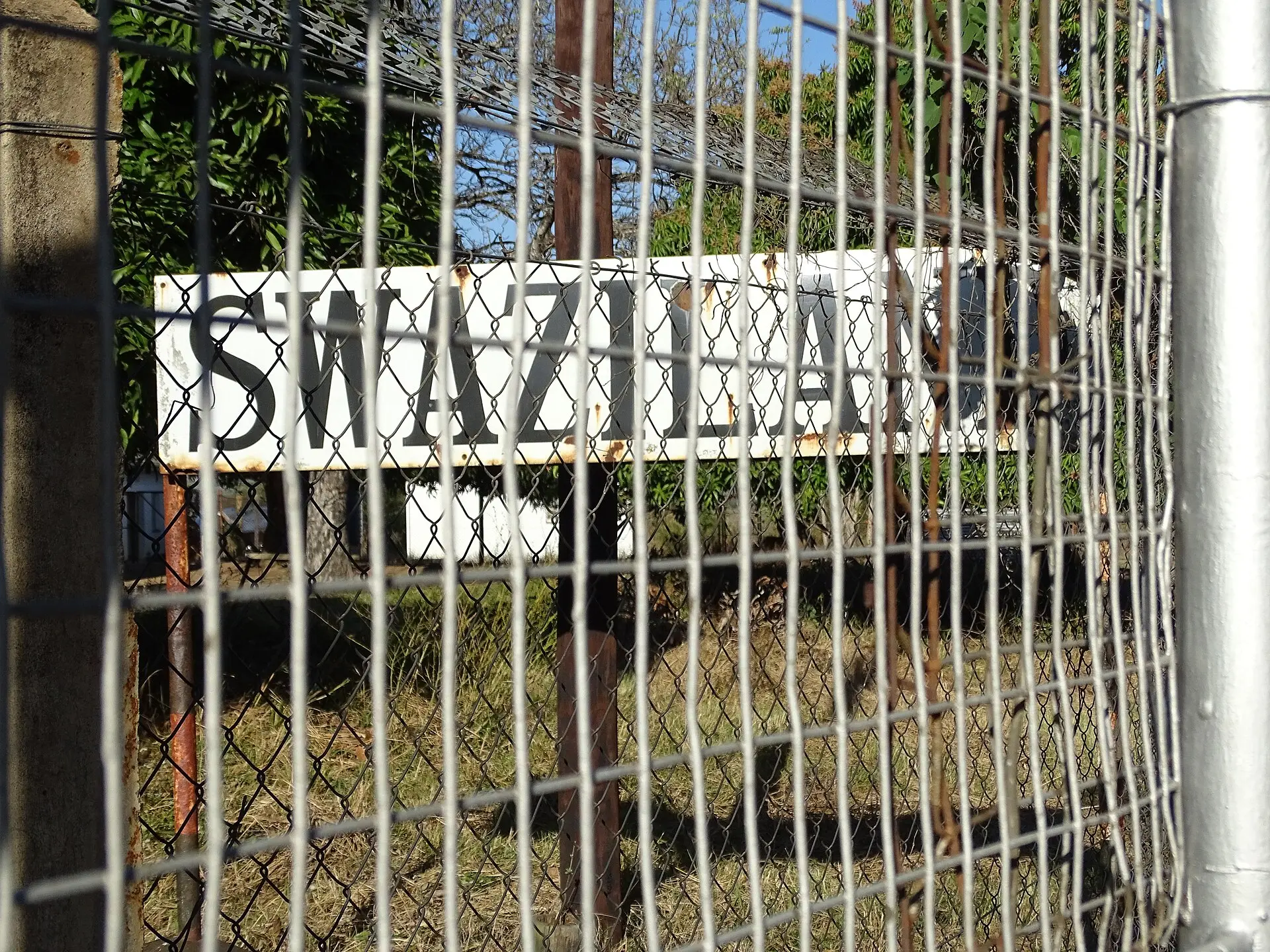
Yes. King Mswati III renamed the country the Kingdom of Eswatini in April 2018; old documents and some forms still say Swaziland.
Sources and official information
Facts were checked against these official sources in November 2026. Opening hours, prices and timetables change, so confirm before you go.
VisitEswatini.com is an independent guide, not the official site of the Eswatini Tourism Authority, the Government of Eswatini, Big Game Parks, the Eswatini National Trust Commission or any operator. Some links are affiliate links: tours go to GetYourGuide and hotels go to Booking.com, and we may earn a commission at no extra cost to you.